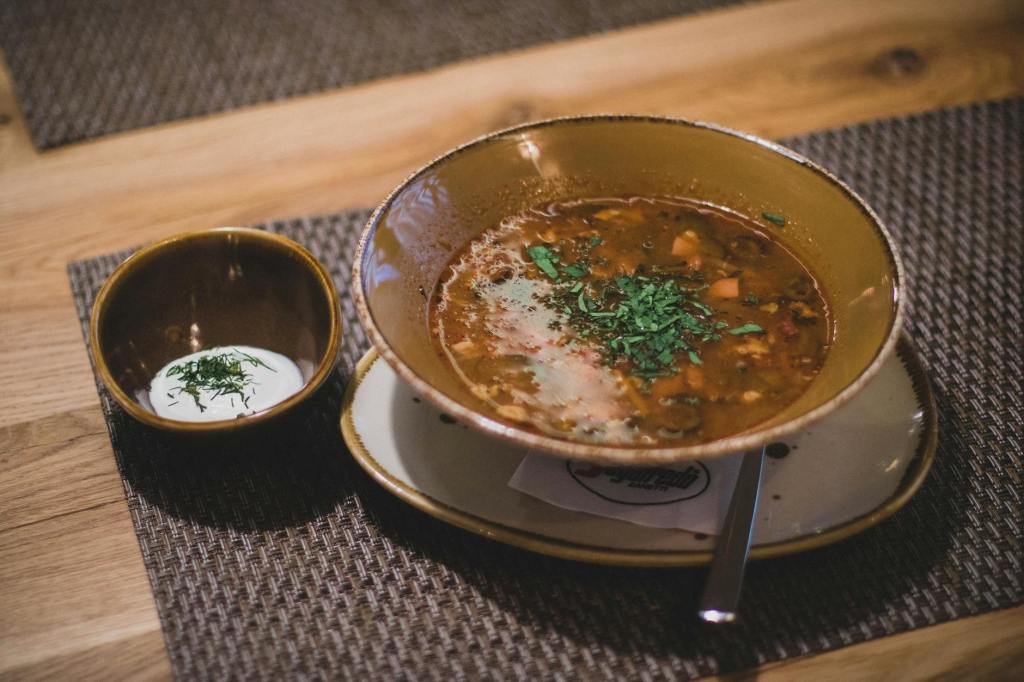
I really don’t remember how I came to like this pungent soup that my mom makes, but I know it has always been my favorite. It isn’t just a soup but a medicine. A medicine for an upset stomach or a beaten soul. The recipe is a mix of a lot of radish and radish leaves, sunshine and love, but I think it is mostly love. My dad helps her pick fresh radishes from the kitchen garden, wash, cut and keep them out in the sun, for drying. My mom and dad take turns to keep an eye on the drying radishes so that no wandering birds can sneak and eat some. My mom then cleans an airtight bottle, stuffs the dry radish pieces into it and keeps it, upside down, out in the sun, for days. It looks like some kind of miracle that those radishes turn out to become the irresistibly delicious ‘gundruk/sinki’ in the end.
I sometimes take out a few strands of gundruk from the bottle my mom gave me when I last went to meet her and make the pungent soup. It is more precious to me than any gold or diamond because it is a tradition and emotion that cannot be replaced. My dad told me that the recipe was passed down generations after generations. I sometimes wonder about the person who first discovered this recipe to make gundruk. Was it a serendipitous discovery, or did that person deliberate and perform some experiments with whatever resources were available at that time? It is now known that this sort of miraculous change or enhancement in flavor is nothing but a result of fermentation.
Fermentation played a major role in the development of food and beverages in the history of human society. From alcoholic beverages to tangy pickles. This process was popular in regions of China since ages, but the involvement of microorganisms in fermentation was shown by Louis Pasteur in the mid-19th century. I sometimes like to think of Pasteur as our long-lost ancestor who came up with the recipe of gundruk. Sitting in his tiny laboratory and trying out different vegetables, cutting them, drying them, fermenting them and finally tasting them. How many times would he have spitted out the product of his experimentation. I could only imagine his elation when he would have finally come across the perfectly fermented gundruk. Would he have made a soup with it, or eaten as it is? Hard to tell. But I would like to believe that he ate it all.


 Room Writer
Leave a comment